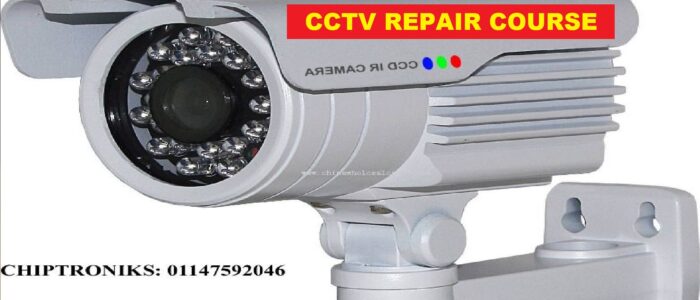
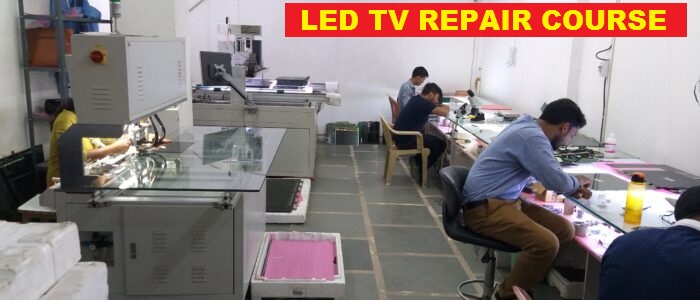
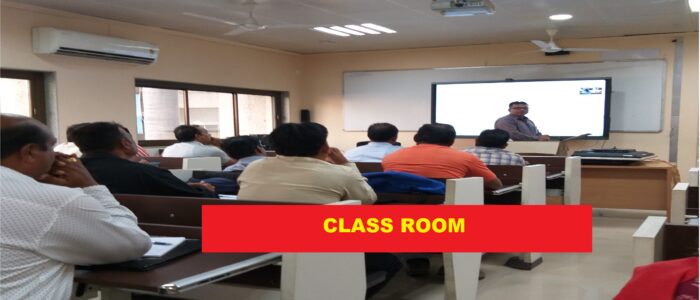
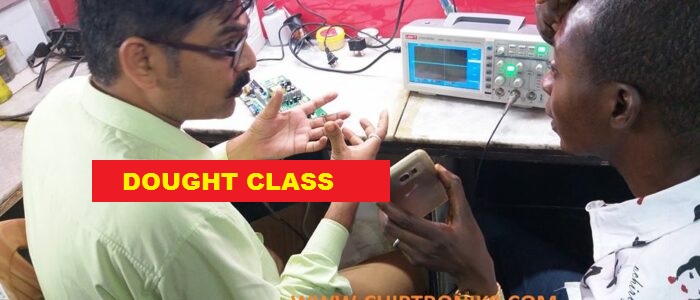
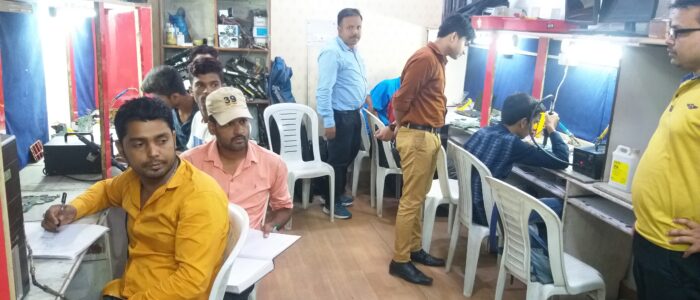
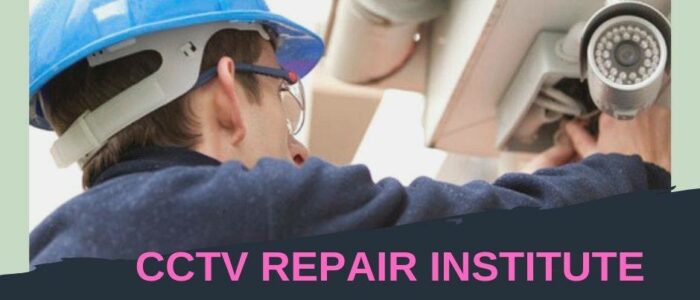
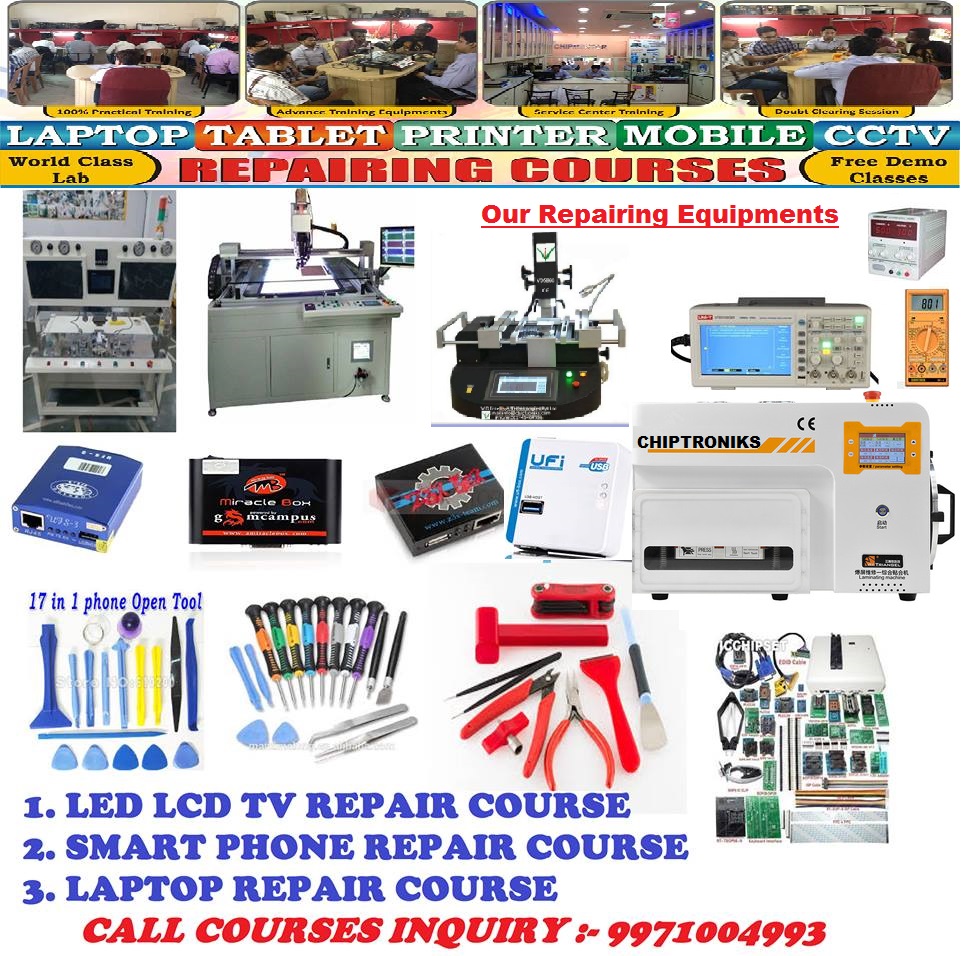
CHIPTRONIKS , the defacto brand  of the repairing industry has launched the full fledged course for the CCTV Repairing and maintenance . We are completely devoted to the repairing industry and therefore have prepared a comprehensive course on CCTV repairing and maintenance .

Modules of CCTV Repairing Course (Professional Certificate in CCTV Repairing) : 2 months

1.Foundations of CCTV
1. Fundamentals of the CCTV image
2. Digital compression
3. Progressive scanning
4. Setting up TFT ,plasma and LED display screens
5. Security and emergency lighting
6. The new CCTV Strategy and operational Requirement
7.Selecting the best camera and lens combination
8. Digital storage and retrieval
9. test equipment
10. applying British, European and other international standards
11. Health and safety . Working at heights and electrical
12. wireless CCTV
13. Exploring the modern CMOS cameras
14. Lenses : Fibre , Coax , twisted pair , IP and free space
15. Thermal imaging

2. CCTV Installations

  1. Review of the base video signal
  2. Setting up and applying function switches on cameras
  3. Selecting and installing appropriate lens and camera combinations
  4. Configuring day and night cameras with appropriate filters
  5. Establishing masking, tour set up and programming of dome cameras
  6. Wiring a fully functional camera (PTZ) using Kopex and multicore cabling
  7. Applying active and passive baluns to CAT5 cabling circuits
  8. Installing cameras over long runs of coaxial cable
  9. Setting up and installing multiple cameras into DVRs
  10. Calculating necessary storage for given applications
  11. Best practice set up and termination procedures for display screens
  12. Using oscilloscopes
  13. Using pattern generators
  14. Using cable length meters
  15. Configuring IP network cameras and CoDecs
  16. Programming and installation of video analytical equipment
  17. Health and safety

3. CCTV Repair and Maintenance

  1. Setting and operation of test equipment
  2. Diagnosing and rectifying common faults
  3. Fault finding telemetry receivers and transmitters
  4. Locating and rectifying cable faults
  5. Hum bar elimination
  6. Identifying insertion losses using CAT5 cable
  7. Correcting video signals over long cable runs
  8. Re-setting camera tracking and focusing
  9. IP problems and solutions
  10. Correct setting up of monitors
  11. VDU screens
  12. DVR and NVR recorders
  13. Display and termination faults
  14. VCR and multiplexer symptoms and remedies
  15. Health and safety on site and in workshops
  16. Maintenance recommendations

4.Practical Optical Fibre

  1. Fundamental theory of optical fibre
  2. Using single mode and multimode for the security industry
  3. Learning to splice broken and damaged fibre
  4. Light absorption
  5. Scattering losses
  6. Types of dispersion
  7. Graded index multimode
  8. Loss mechanisms in optical fibre
  9. Termination methods including crimp and cleave
  10. Various connector types such as LC, ST, FC, MTRJ and SC
  11. Optical testing procedures (OTDR)
  12. Benefits and drawbacks of direct terminations
  13. Learn to design and plan an optical fibre solution
  14. Practical experience in measuring losses
  15. Installing and setting up optical fibre transmitters and receivers
  16. An appreciation of alternative transmission methods
  17. Health and safety

5.CCTV MasterClass

  1. The essentials of the analogue signal
  2. Digital sampling and compression techniques
  3. Digital recording and storage
  4. Resolution criteria explained – digital and analogue
  5. Technical and operational interpretation of NORMAN
  6. HD technology
  7. CRTs, TFTs, rear screen projection and plasma display screens
  8. Understanding the complex range of menu features on cameras
  9. Mega pixel and high density technology
  10. Resolution – pixels per millimetre
  11. T factors and ramping
  12. Correctly calculating optics
  13. Security lighting. Towers and housings. Power supplies
  14. Coaxial cable structure, calculus and design criteria
  15. Video motion detection and analytics
  16. Single and multimode optical fibre
  17. Peak white inverters and video distribution amplifiers
  18. Technical interpretation of CCTV strategy
  19. Free space transmission
  20. System design a large project

6. Practical CCTV

  1. The basic theory of television and CCTV
  2. The foundations of digital CCTV and IP
  3. Setting up black and white and colour display screens
  4. The composite video signal
  5. Setting up, back focusing and zoom tracking cameras
  6. Selecting and applying appropriate lenses and filters
  7. Understanding different lighting parameters for CCTV cameras
  8. Practical lens calculations and the Operational Requirement
  9. Handling video and data storage media. Setting up digital video recorders
  10. Selecting, connecting and installing cables
  11. Use of oscilloscopes, bar generators and other test equipment
  12. Commissioning, fault finding and routine maintenance
  13. Selecting and applying function switches on cameras
  14. Direct drive, video iris, varifocal, aspherical, zoom and manual lenses
  15. Installing fixed focus cameras into housings
  16. Setting up and programming domes
  17. Wiring a fully functional camera (PTZ)
  18. Connections over coaxial cable
  19. Installing cameras over twisted pair
  20. Setting up and terminating display screens
  21. Fibre optics
  22. Legal considerations
  23. Standards
  24. Health and safety

7. CCTV System Planning

  1. Developing the Operational Requirement
  2. Calculating the best camera and lens for the installation
  3. Interpreting manufacturers’ data sheets Practical site surveying
  4. Costing exercises
  5. Video management
  6. Rotakin, HOSDB and NORMAN testing
  7. Choosing appropriate housings and brackets
  8. CCTV overview of products: limits, benefits and applications
  9. Selecting cameras and lenses
  10. Effective lighting in variable environmental situations
  11. Automatic number plate recognition (ANPR)
  12. National and international system evaluation criteria
  13. CSCS on-site health and safety
  14. Inspectorates and governing bodies
  15. Data protection and human rights
  16. Standards
  17. Codes of practice

8.Advance CCTV Systems

  1. The fundamentals of CCTV systems
  2. Choosing the correct camera for the job
  3. How to select the right lens
  4. Types of recording devices
  5. Types of lighting and their significance
  6. Video evidence and confidentiality
  7. Varieties of body-worn devices and their deployment
  8. The principles and practices of audio surveillance
  9. Gotcha techniques uncovered
  10. Building and utilising practical hides
  11. Safe transmission devices
  12. Essential tools
  13. Vital test equipment
  14. Getting the picture from A to B
  15. Basic cabling techniques
  16. Signs and data protection
  17. Human rights
  18. Civil liberties

9.Operational requierment

  1. The HOSDB and Police CCTV strategy
  2. Data Protection and signage
  3. British, European and international Standards
  4. Practical tuition developing the Operational Requirement
  5. The Home Office facial identification procedure
  6. Using NORMAN to have a repeatable and measurable system
  7. An overview of digital recording
  8. Lighting essentials
  9. Selecting the best camera and lens combination
  10. Independent Inspectorates
  11. Gathering video evidence
The basic theory of television and CCTV
· The foundations of digital CCTV and IP
· Setting up black and white and colour display screens
· The composite video signal
· Setting up, back focusing and zoom tracking cameras
· Selecting and applying appropriate lenses and filters
· Understanding different lighting parameters for CCTV cameras
· Practical lens calculations and the Operational Requirement
· Handling video and data storage media. Setting up digital video recorders
· Selecting, connecting and installing cables
· Use of oscilloscopes, bar generators and other test equipment
· Commissioning, fault finding and routine maintenance
· Selecting and applying function switches on cameras
· Direct drive, video iris, varifocal, aspherical, zoom and manual lenses
· Installing fixed focus cameras into housings
· Setting up and programming domes
· Wiring a fully functional camera (PTZ)
· Connections over coaxial cable
· Installing cameras over twisted pair
· Setting up and terminating display screens
· Fibre optics
· Legal considerations
· Standards
· Health and safety